How to Build a Fintech Backend That Stops Losing Customers
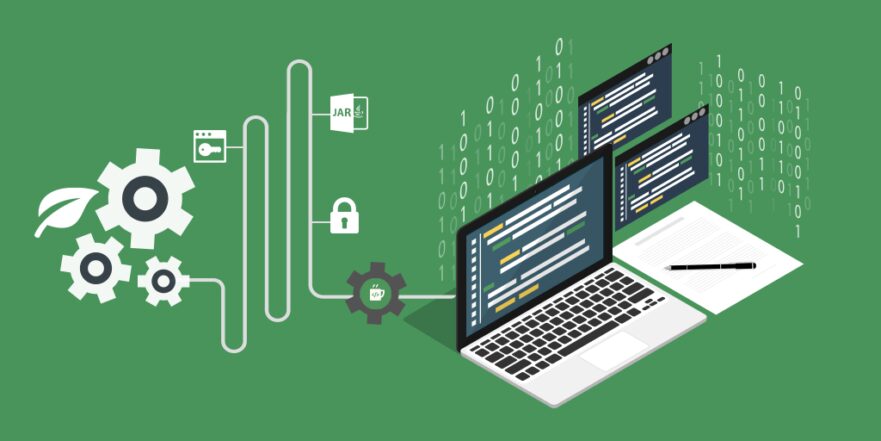
A financial platform that loses customer trust is not a marketing problem. It is an engineering problem, and the fix is not a patch. When I rebuilt the backend for a payments platform that was haemorrhaging clients over slow, unreliable transaction handling, the constraint was not time or budget. The constraint was that every decision had to hold under load, because in fintech, a five-minute outage is a client conversation you do not want to have twice. This is a guide for founders and product owners deciding how to build a fintech backend, based on what that rebuild actually required.
Monoliths fail in fintech for a specific reason
The original system was a monolith. Not a bad one by general standards, but a bad one for payments. When the settlement path slowed down, it took the reporting path with it. When reporting stalled, operations lost visibility. When operations lost visibility, clients lost confidence. The failures were coupled because the code was coupled.
The decision to move to microservices was not about being modern. It was about fault isolation. A failure in one service path should not be able to take down settlement. That is the requirement. The architecture follows from it.
I rebuilt the backend around Spring Boot microservices, with Spring Security enforcing access at the service boundary. Each service owned its own data. Settlement ran independently of reporting. A degraded analytics pipeline no longer meant a degraded transaction flow.
One payment gateway is a single point of failure
The platform had been integrated with a single payment provider. That is the default choice when you are moving fast. It is also the choice that creates the most fragile system possible.
In 2026, the industry consensus has moved toward payment orchestration, routing transactions dynamically across multiple acquirers so that a single-provider outage does not become a customer-facing failure. The data supports this: routing across providers can reduce checkout failures by up to 25%. That number matters when your clients are measuring you on uptime.
The approach I took was to integrate multiple payment gateways behind one interface. From the application layer, the payment call looks the same regardless of which provider processes it. The routing logic lives in one place. Adding a new provider does not require changes to the business logic. Removing a failing one does not require a deployment.
This is the architectural decision that most directly reduced downtime. The system went from a single point of failure to a resilient network of options.
Encryption is not optional and not a feature
Financial data requires encryption in transit and at rest. That is not a differentiator. It is the baseline. But the way you implement it determines whether your security posture is auditable or just assumed.
I implemented encryption protocols at the infrastructure level, not the application level. Sensitive data was encrypted before it touched the database, and the keys were managed separately from the data store. Spring Security handled authentication and authorisation at the service boundary, so no service could call another without a verified identity.
The practical result was that a breach in one service could not expose the full dataset. That is the goal. Not zero vulnerability, because that does not exist, but contained blast radius.
If you are building for regulated markets, this architecture also makes audit preparation significantly less painful. The controls are structural, not procedural. I have seen what the alternative looks like in public sector work too, where the audit surface is even more demanding. The OptimalTax platform required the same discipline applied to tax data, and the structural approach is what made the 99% calculation accuracy verifiable rather than claimed.
Real-time analytics changed what operations could actually do
The old system ran nightly exports into a reporting database. By the time operations saw the numbers, the business had already moved. A settlement anomaly that appeared at 11pm had been accumulating since the previous morning.
I layered real-time analytics directly onto the transactional store. Operations could see the state of the business as it happened, not as it was twelve hours ago. This is not a complex architectural decision. It is a consequential one. The cost of acting on stale data in fintech is not theoretical.
The shift also restored client trust in the reporting itself. When clients had stopped trusting the reports, the problem was not the numbers. It was the lag. Real-time data is verifiable against what clients were seeing on their own end. Nightly exports are not.
Response times dropped 30% and downtime dropped 40%
Those are the outcomes from the Financial Services Platform rebuild. Response times fell by 30%. System downtime fell by 40%. Client satisfaction reached 100%.
I am not listing those numbers to market the result. I am listing them because they are the measurable consequence of specific decisions: fault isolation through microservices, payment gateway abstraction, encryption at the infrastructure layer, and real-time analytics on the transactional store. Each decision had a cost. The microservices architecture added operational complexity. The gateway abstraction layer required careful interface design. The encryption implementation added latency that had to be profiled and optimised.
The trade-offs were worth it. But they were trade-offs, not free wins.
The stack is not the decision, the architecture is
The stack for this rebuild was Java, Spring Boot, Spring Security, PostgreSQL, Stripe, and Docker. That is a mature, well-understood combination. It is not the only combination that would have worked. The stack served the architecture, not the other way around.
Founders sometimes arrive at architecture decisions by asking which framework is popular. That is the wrong starting point. The starting point is the failure mode you are trying to prevent. For this platform, the failure mode was coupled failures under load. The architecture answered that. The stack was chosen to support the architecture reliably.
This is the same logic I apply across sectors. The Workbud shift management platform had a different failure mode, concurrent write conflicts on shift assignments, and the architecture reflected that constraint rather than a preference for any particular technology.
If you are a founder deciding how to build a fintech backend, start with the failure modes your clients cannot tolerate. Write those down before you write any code. The architecture that prevents those failures is the one you want. Everything else is implementation detail.
If the architecture decision is the one you are facing right now, the full case study shows exactly how each choice played out in a production system. If you want to talk through what the right structure looks like for your platform specifically, the contact form is the place to start.
Want to talk about something here?
Let’s talk about it.